Maramureș, in Romania’s far north on the Ukrainian border, is where traditional village life has survived most intact. Monumental carved oak gates guard the farmsteads, women still weave on handlooms, and on Sundays whole villages walk to church in traditional dress. The region is sheltered by the Rodna, Maramureș and Gutâi mountains.
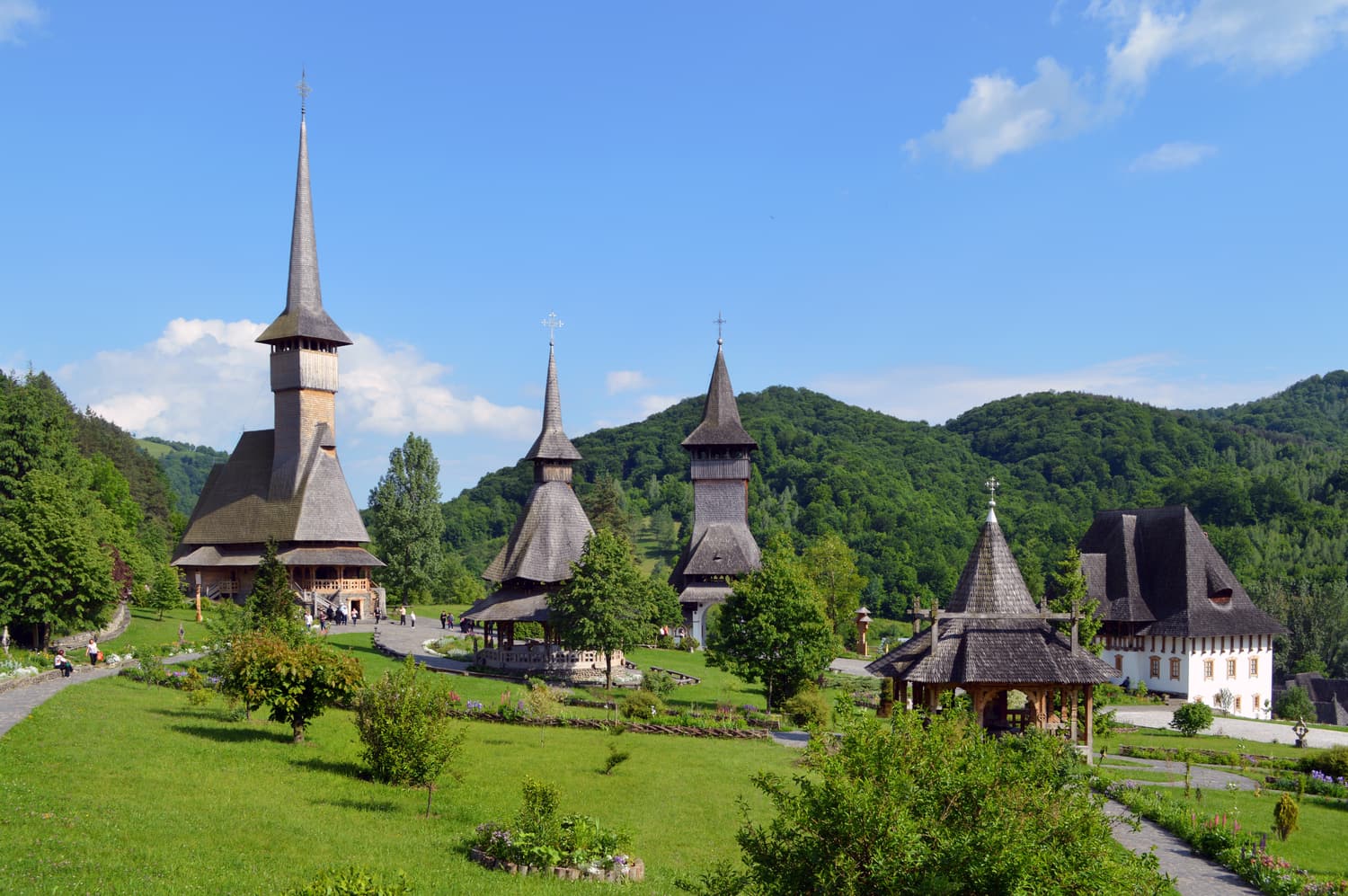
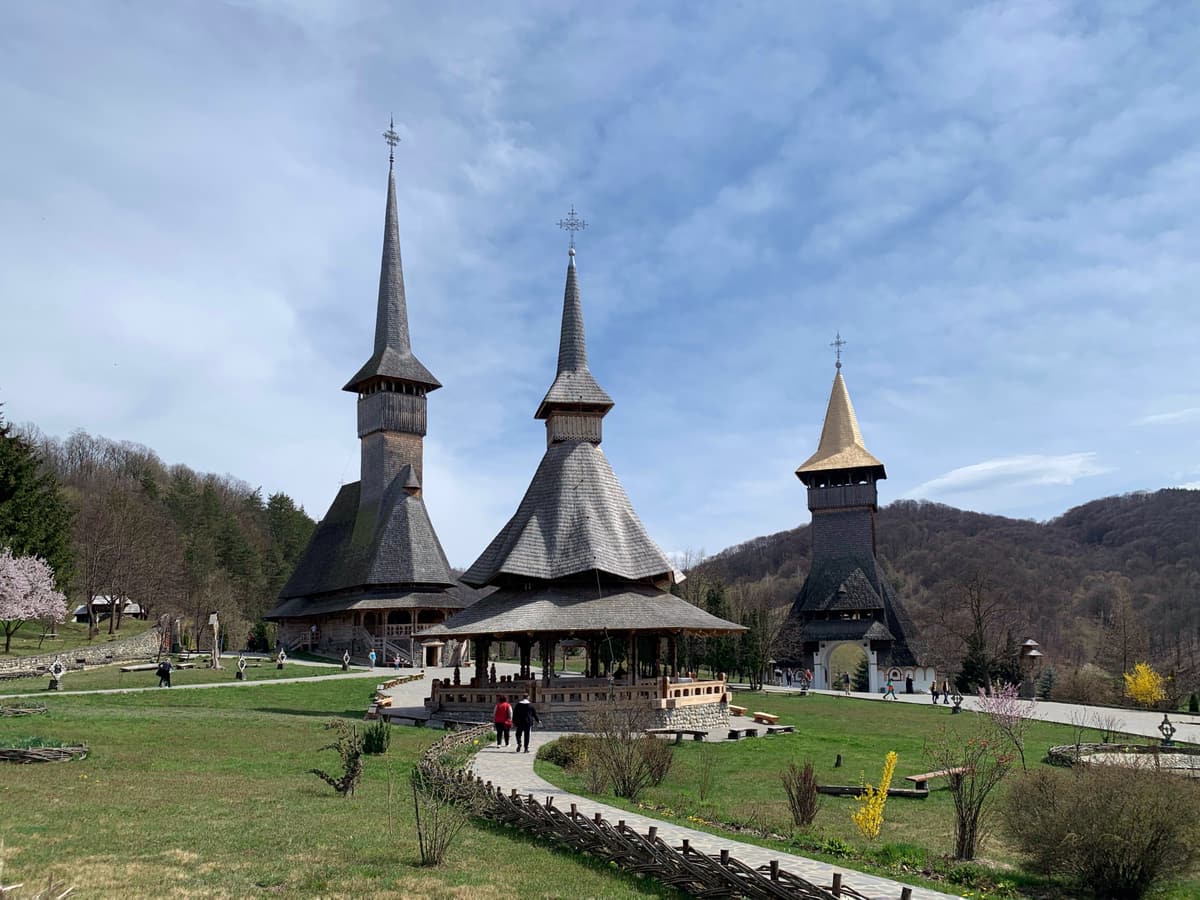
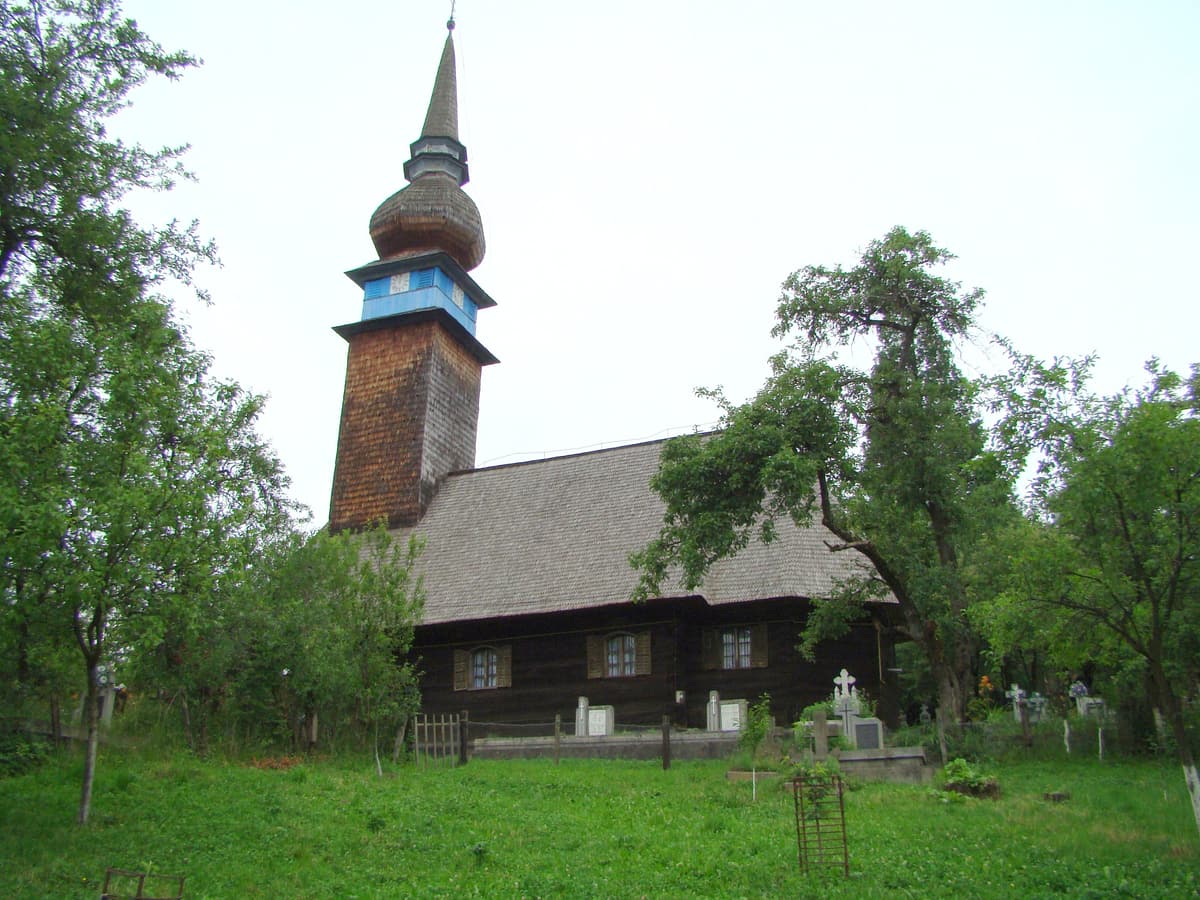
Its eight wooden churches on the UNESCO list — including Ieud, Bârsana, Surdești, Poienile Izei and Budești — have steep shingled roofs and needle-thin spires, with painted interiors inside. Add the colourful Merry Cemetery of Săpânța, with its painted, humorous epitaphs, and the Mocănița steam train on the Vaser valley.
Top things to do: Maramureș
Tour the wooden churches
Drive the Iza and Mara valleys between Bârsana, Rozavlea, Ieud and Poienile Izei. Many churches are kept locked; ask at the nearest house or look for the key-holder’s phone number on the gate.
The Merry Cemetery at Săpânța
Hundreds of blue wooden crosses carved and painted with scenes and witty verses about the lives of the people buried beneath — started by the local artist Stan Ioan Pătraș in the 1930s.
Ride the Mocănița
A narrow-gauge forestry railway from Vișeu de Sus up the wild Vaser valley, one of the last working steam-hauled forest railways in Europe. Book ahead in summer.
Sighet Memorial
The former political prison in Sighetu Marmației is now a moving memorial to the victims of communism, and an essential visit to understand modern Romania.
How to get to Maramureș
- From Cluj-Napoca: around 3.5–4.5 hours by road to Sighetu Marmației or Vișeu de Sus.
- By air: Baia Mare has a small airport with limited domestic flights; Cluj has far more connections.
- By train: overnight and day trains reach Sighetu Marmației and Vișeu from Bucharest and Cluj, slowly.
- On a tour: long day trips from Cluj are possible, but two or three nights in the region is better.
Insider tips
- A car is almost essential to get around the villages.
- Stay in a family guesthouse (pensiune) — home-cooked meals and pălincă are part of the experience.
- Sunday mornings are the best time to see people in traditional dress; be discreet with cameras at services.
- Roads are slow and shared with horse carts, especially at dusk.
Best tours & tickets: Maramureș
These top-rated experiences are the easiest way to see Maramureș:
Day trip from €155 From Cluj: Maramureș Adventure — Tradition, Folk Art & Scenery
Maramureș is far from everywhere, which is exactly why it survives. This long day from Cluj covers the essentials — wooden churches, carved gates and village life — but two nights in the region is better still.
- The wooden churches and carved gates of Maramureș
- Traditional villages and folk art
- Mountain scenery of northern Romania